MAGA Inc.: Tether

Paolo Ardoino. Photo: Gage Skidmore. Used under Creative Commons license.
Trump’s pro-crypto vision has been a blessing for “tether” - the world’s most traded cryptocurrency, a type of stablecoin pegged to the U.S. dollar - which trades as USDT.
(Click here for the table of contents of MAGA Inc.: A Guide to Trump's World of Crypto Czars, Tech Titans and Prison Profiteers.)
USDT stablecoins were created by an eponymous company named Tether, which generated over US$10 billion in profits in 2025. It claims to have over 500 million customers, with 30 million new users joining every quarter.
Tether was founded in 2014. It is run by two Italians - Giancarlo Devasini, a reclusive former plastic surgeon and electronics importer, who owns almost half of the company, and Paolo Ardoino, a software developer, who is now the CEO. In January 2025, Tether relocated its headquarters from the British Virgin Islands to El Salvador, after the government of President Nayib Bukele slashed regulations and taxes for crypto companies.
“Our product is so simple that it can be used by anyone. It’s so inclusive,” Ardoino said in a 2024 podcast interview. “We can remove all intermediaries that are taking advantage and taking a bit from every single transaction, multiple bites from every single transaction….All those things will be crushed by stablecoins.”
Over the past 11 years, Tether has allegedly become the trusted currency for criminals. U.S. regulators have opened at least 19 investigations into the company over the use of its stablecoin in drug trafficking, money laundering and sanctions busting as well as for allegedly misrepresenting whether or not it really holds reserves equal to the coins that it has issued.
For these reasons, Tether stopped directly serving U.S. customers in 2021, but after Trump’s victory in the 2024 presidential election, it returned to the country in an effort to shed its troubled image and reshape crypto regulations.
In 2025, Tether launched ads in Politico’s Morning Money newsletter, a publication for Washington D.C. insiders, highlighting how it was working with U.S. law enforcement including the Department of Justice, the U.S. Federal Bureau of Investigation (FBI) and the U.S. Secret Service.
“There is no company…even in the traditional financial system, that has such a breadth of collaboration with law enforcement,” Ardoino told CNBC, a business news channel. “We are always trying to do better and more to block criminal activity…we have much better tools than the traditional financial system and we’re proving that everyday.” (As if that weren’t enough, Tether is helping fund Trump’s new US$300 million White House ballroom, signaling its full backing of the administration.)
In July 2025, Ardoino attended the signing ceremony for the Genius Act at the White House.
The Genius Act requires stablecoins to be fully backed 1:1 with reserves of cash, or easily convertible assets, with monthly reserve disclosures. Critics, however, warn of what they call “the Tether loophole,” namely the legislation’s failure to regulate stablecoins issued by foreign companies like Tether.
“If you’re selling a stablecoin through Tether directly to somebody in the United States, they’re going to be covered by this law,” Scott Greytak of Transparency International, an anti-corruption group, told the International Consortium of Investigative Journalists, a global investigative news organization. “But what if an American goes to Mexico, or to the [British Virgin Islands], or anywhere outside of U.S. jurisdiction, stocks up on a bunch of crypto and then sells it in the United States? That’s what we call the secondary market, and the secondary market is totally unregulated by [the Genius Act]. So it’s a pretty obvious loophole, a pretty obvious map for evading U.S. law.”
Indeed, Tether has adopted a dual-market strategy – it recently unveiled a U.S.-based stablecoin called USAT, which will be regulated under the Genius Act. And the company tapped Bo Hines, former executive director of Trump’s presidential crypto advisory group, to serve as the CEO for Tether’s U.S. operations, which will be headquartered in Charlotte, North Carolina.
“It’s no surprise the President’s top crypto advisor would leave to work at the world’s top stablecoin issuer by assets right as the administration begins to implement the GENIUS Act,” Amanda Fischer, former chief of staff to the chair of the U.S. Securities and Exchange Commission during the Biden administration, wrote in an email to Law.com, an online news site. “[This in]itself is a huge giveaway to the crypto industry that seeks to legitimize stablecoins even notwithstanding the risks to consumers, the financial system and our national security.”
Related Articles

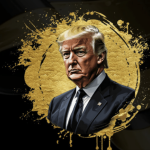
A couple of months before the November 2024 election, a curious document landed in investors' inboxes. Titled the “World Liberty Gold Paper” and emblazoned with a stern-looking picture of Donald Trump in a coin-shaped splash of gold, it announced the Trump family’s entrée into the world of cryptocurrencies. Read More


One of the biggest beneficiaries of the presidency of Donald Trump is a Wall Street services firm named Cantor Fitzgerald, which has become a major source of funds for crypto executives and AI infrastructure such as data centers.
Read More